How to Read Silver Spot Prices: Bid, Ask, and Dealer Premiums Explained
You check the silver price and see $28.00 an ounce. Then you open a dealer's page and the same metal costs $30.40. Nothing shady is necessarily happening. You are looking at two different prices for two different things: a wholesale screen quote and a retail transaction that includes fabrication, handling, and a dealer's margin.
Understanding that gap is the difference between guessing and knowing what you are paying. Once you can read the bid, the ask, and the premium, comparing dealers becomes straightforward.
What the Spot Price Actually Tells You
The spot price is the price for immediate delivery in the wholesale silver market, where large bars — typically 1,000 troy ounces — change hands between professional dealers and institutions. It is quoted in U.S. dollars per troy ounce, and a troy ounce is about 31.1 grams, slightly heavier than the everyday ounce.
Spot is not a single official number stamped by one authority. It is a live, negotiated market, and different data providers may show slightly different figures because they sample different venues or use slightly different timestamps. That is normal. If one site shows $27.98 and another shows $28.01, you are not seeing an error; you are seeing the market's edges.
One more detail matters: many charts show the last traded price or a midpoint, not the bid and ask. That is fine for tracking the trend, but it is not enough to calculate what a dealer should charge you.
Bid, Ask, and the Spread
In any traded market, the bid is the price a buyer is willing to pay, and the ask (also called the offer) is the price a seller is willing to accept. If you are selling wholesale, you receive the bid. If you are buying wholesale, you pay the ask.
The difference between them is the spread. It compensates market makers for taking on risk, holding inventory, and providing liquidity. In liquid silver markets during active hours, the spread can be just a few cents an ounce. During quiet hours, around major news, or when volatility jumps, it can widen noticeably.
Suppose the bid is $27.94 and the ask is $27.99. The spread is five cents, or roughly 0.18% of the price. That looks tiny, but it is not the only cost you face at retail. Dealers add their own spread on top of the market spread.
Why the Spread Bites When You Sell
If you buy and sell at the same moment with no price movement, you still lose the spread. That is not a penalty; it is the cost of immediacy. When you sell physical silver to a dealer, the dealer's buyback price is usually below the spot bid, not at it. The gap covers their risk, refining, and the chance that the price moves before they can resell.
Where Dealer Premiums Come From
A dealer premium is the amount added to a spot reference to arrive at the retail price. It is not pure profit. It has to cover real costs: refining and fabrication, minting or stamping, packaging, assay certificates where relevant, insured shipping, storage, hedging, payment processing, compliance, and the dealer's operating margin.
Premiums vary widely by product. A 100-ounce bar usually carries the lowest premium per ounce because it is cheap to make relative to its value. One-ounce generic rounds sit a bit higher. Sovereign coins often cost more because of minting, recognition, and demand. Fractional coins — half-ounce, quarter-ounce, or smaller — can carry very high premiums per ounce. A $6 premium on a one-tenth-ounce coin works out to $60 per ounce, which is a very different number from $6 on a one-ounce round.
Retail demand moves premiums too. When many buyers rush into physical silver and dealers run short, premiums can climb quickly. When demand is quiet, they tend to compress. That is one reason two dealers can quote noticeably different prices on the same day.
Taxes are separate. Depending on where you live, sales tax or VAT may apply to silver. That is a tax, not a dealer premium, and the rules vary, so check locally or ask a tax professional.
A Round-Number Example
Suppose spot silver is quoted at $28.00 an ounce. A dealer sells a one-ounce generic round for $30.24. The premium is $2.24, or about 8% over spot. That is a plausible retail markup for that product in a normal market.
Now suppose that same dealer will buy the round back at $27.30 when the spot bid is $27.90. The buyback discount is $0.60 under spot. Buy at $30.24, sell at $27.30, and you are $2.94 apart before shipping or tax. To break even, the market needs to rise by roughly that amount, a little over 10% from the original spot price. That sounds like a lot, but it is the normal cost of buying and selling a small retail product. The lesson is not that dealers are unfair; it is that round-trip costs are real and should be part of your plan.
Reading a Dealer Quote: What to Ask
Before you compare two prices, make sure you are comparing the same things. A useful checklist:
- Spot reference and timestamp. Ask which spot price the quote is based on. A premium quoted over the spot ask is not the same as one quoted over the spot bid.
- All-in price per ounce. Include shipping, insurance, and any handling fee. A low headline price with expensive shipping is not a low price.
- Premium per ounce, not per coin. Divide the total premium by the silver content. This is the only fair way to compare a 1-ounce round with a 1/10-ounce coin.
- Buyback price. Ask what the dealer will pay for the same item, in the same quantity, today. This tells you the real round-trip cost.
- Payment method. Checks and wires are often cheaper than credit cards, which may carry an extra fee.
- Minimum order and delivery time. Small orders can carry higher per-ounce costs. Delivery delays affect your exposure to price moves.
- Whether the quote is locked. In a fast market, a quote can expire in minutes. Ask how long the price is good for.
Why Two Coins With the Same Metal Cost Different Amounts
A one-ounce silver round and a one-ounce sovereign coin contain the same amount of silver, but they are not the same product. The sovereign coin is more recognizable, easier to resell in many markets, and often carries a higher premium. The generic round is cheaper to buy but may be bought back at a wider discount.
Do not compare premiums in isolation. Compare the buy price and the sell price together. A coin with a $3 premium and a $1 buyback discount can be cheaper to own than a round with a $2 premium and a $1.50 discount, depending on how long you hold and where you sell.
Market Hours, Volatility, and Slow Quotes
Silver trades nearly around the clock from Sunday evening to Friday afternoon in the United States, but liquidity is not constant. Spreads tend to be tighter during active sessions and wider during quiet hours. Dealers may freeze or widen quotes around the weekly open, during major economic releases, or when the price is moving fast.
This matters because a dealer's premium may update more slowly than the spot price. If spot moves sharply, a quote that looked generous five minutes ago may be stale. Ask for a locked quote and confirm the spot reference before you commit.
A Five-Minute Routine Before You Buy or Sell
You do not need a trading desk to avoid the common mistakes. A short routine covers most of it.
- Check two independent spot sources and note the bid, the ask, and the time.
- Ask the dealer for the all-in price per ounce, including shipping and insurance.
- Subtract the spot ask to find the premium per ounce.
- Ask for the buyback price on the same item and quantity.
- Calculate the round-trip cost: buy price minus buyback price.
- Compare that round-trip cost across two or three dealers, not just the headline price.
- Start with a small order to test the dealer's service, packaging, and delivery time.
If you are buying in size or selling a large position, consider speaking with a financial professional about how physical silver fits your broader plan. This is general education, not personalized investment advice. The numbers above are illustrative, and your local taxes and dealer terms will affect the final cost.
Read the screen price as a starting point, not a final bill. The bid tells you what the market will pay you. The ask tells you what the market wants for metal. The premium tells you what it costs to turn wholesale metal into something you can hold in your hand. Once those three numbers are clear, a dealer's quote stops being a mystery and becomes a simple comparison.
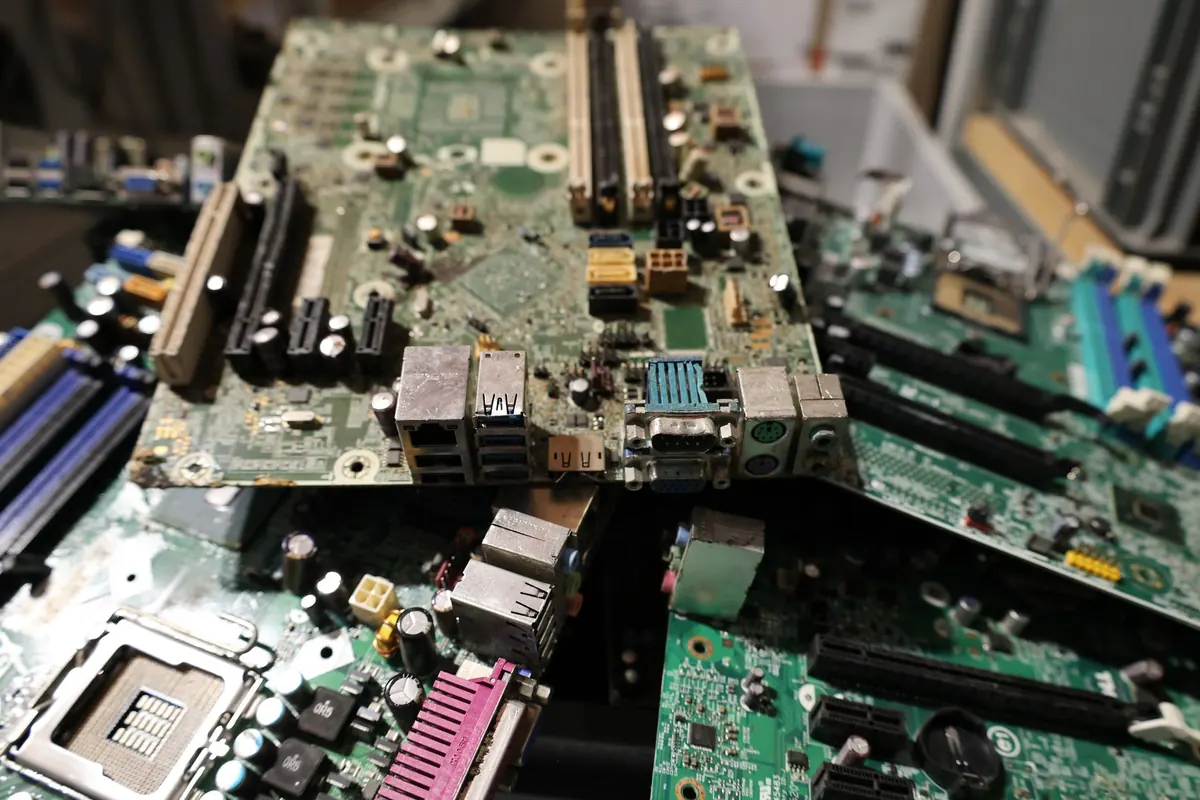
Photo: crazy motions / Pexels
How Recycled Silver Moves from Electronics to Refined Bars
Recycled silver travels a long road from circuit boards and old contacts to 999-fine bars. Here is how...

Silver Purity Marks for Beginners: 925, 958, and 999 Explained
A plain-English guide to silver purity marks — what 925, 958 and 999 mean, how to read the rest of a...
About Us